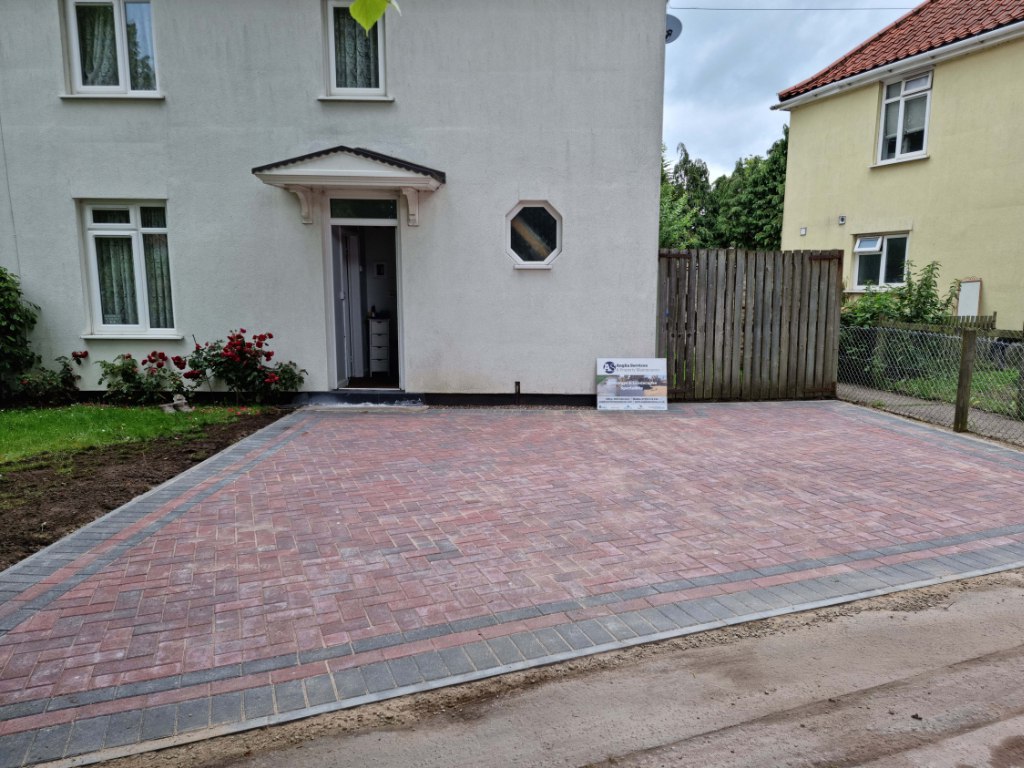
Should You Be Concerned if Only a Few Paving Blocks Have Sunk?
A small number of sunken paving blocks may not initially seem like a significant driveway problem. The surrounding block paving can still look perfectly serviceable, vehicles may continue to use the driveway normally, and the affected area might only be noticeable after rainfall. However, localised settlement is worth investigating because paving blocks generally sink for a reason.
For homeowners in Huntingdon, Cambridgeshire, a few sunken blocks do not automatically indicate widespread driveway failure. In many cases, the problem can remain confined to a relatively small area. The important step is establishing why the blocks have moved and whether the supporting construction around them remains stable.
What Does It Mean When Only a Few Paving Blocks Have Sunk?
Block paving depends on more than the individual blocks visible at the surface. Each block is supported by carefully prepared layers beneath it, while the complete paved area relies on suitable compaction, levels, jointing and edge restraint to remain stable.
When several neighbouring blocks drop below the surrounding surface, it usually indicates that something within the supporting layers has changed.
This may be highly localised, or it can represent the early stage of a problem affecting a wider section. Assessing the pattern of settlement helps determine which situation applies.
Localised Settlement Does Not Always Mean the Whole Driveway Is Failing
One small depression should not automatically be interpreted as evidence that the complete driveway needs replacing.
If the majority of the block paving remains level, firm and correctly aligned, the problem may be limited to the construction directly beneath the affected blocks. In these circumstances, lifting the relevant section allows the supporting layers to be inspected and corrected before the paving is reinstated.
One advantage of block paving is that individual blocks can often be lifted without unnecessarily disturbing the complete surface.
The success of a local repair, however, depends on correcting the reason the settlement occurred rather than simply raising the blocks back to their original height.
Why Do Individual Paving Blocks Sink?
Paving blocks themselves do not usually compress significantly. Instead, sinking generally occurs because the material supporting them has settled, moved or been disturbed.
Possible causes can include inadequate localised compaction, deterioration within the bedding layer or movement in the supporting construction.
Water movement can also influence the materials beneath the surface, particularly where drainage or levels are not functioning as intended.
Determining the cause is important because different forms of settlement require different preparation before the blocks are relaid.
A Small Depression Can Collect Rainwater
One of the first practical effects of sunken block paving is often water collecting in the low area.
A properly constructed driveway should have levels that encourage rainfall to move as intended. When a few blocks sink, they can create a depression where water remains after surrounding sections have drained.
This can make the defect more noticeable and may contribute to further deterioration if the underlying weakness remains unresolved.
Repeated puddling is therefore a useful sign that the affected section should be assessed rather than simply regarded as a cosmetic imperfection.
Watch Whether the Sunken Area Is Becoming Larger
The development of the affected area can provide valuable information.
If the same few blocks remain slightly low without noticeable additional movement, the settlement may be contained. If neighbouring blocks gradually begin dropping or the depression becomes deeper, the underlying weakness may be spreading.
Changes in the joints between blocks can also provide clues.
Increasingly uneven joint lines, movement underfoot or blocks beginning to tilt can indicate that the surface is no longer being supported consistently.
Vehicle Loading Can Make Local Weaknesses More Noticeable
Driveways experience repeated loading from vehicle movements and parking.
Where the supporting construction is stable, these loads should be accommodated effectively. If a localised section beneath the paving is already weak, regular vehicle use can make settlement increasingly visible.
This is one reason depressions can sometimes develop around areas that receive concentrated traffic, such as regularly used wheel paths.
Repairing the visible blocks without restoring suitable support beneath them may allow the same area to move again under continued use.
The Bedding Layer Needs to Remain Consistent
Block paving is laid onto a prepared bedding layer that helps provide an even surface and appropriate support.
If this layer becomes uneven, individual blocks can lose consistent support and begin sitting lower than those around them.
Simply adding a small amount of material directly beneath each sunken block without assessing the complete affected area may not provide a dependable repair.
The surrounding blocks may need to be lifted sufficiently to allow the bedding to be restored evenly across the section before the paving is carefully reinstated.
The Supporting Base Should Also Be Considered
Sometimes the visible settlement originates deeper than the bedding layer.
If the supporting base has moved or was not adequately prepared in a particular section, correcting only the upper layer may leave the underlying weakness in place.
This is why identifying the depth and extent of the problem matters.
Where the base remains stable, the repair may be relatively localised. Where deeper movement is identified, the affected construction should be addressed before the blocks are returned.
Jointing Plays an Important Role in Block Paving
The joints between paving blocks contribute to the way the finished surface behaves.
When blocks sink or move, jointing material can be lost or redistributed, leaving wider or inconsistent gaps around the affected area. This can reduce the interlocking behaviour of the paving and allow further movement.
After correcting the supporting layers and reinstating the blocks, the joints should also be restored appropriately.
A good repair therefore involves more than getting the top surfaces level again.
Edge Areas Deserve Particular Attention
Settlement close to the edge of a driveway can sometimes be associated with inadequate support or movement within the boundary construction.
Block paving relies on effective edge restraint to help maintain alignment. If the edge moves, neighbouring paving can begin spreading or dropping.
Sunken blocks near the perimeter should therefore be assessed alongside the condition of the surrounding edge.
Correcting the blocks alone may not provide a lasting result if the restraint responsible for supporting that part of the driveway has become unstable.
Sunken Blocks Can Create an Uneven Driving and Walking Surface
Even a relatively small area of settlement can affect how a driveway feels underfoot or beneath vehicle tyres.
Raised edges between correctly positioned and sunken blocks can create an uneven transition. The difference may initially be slight, but it can become more pronounced if settlement continues.
Addressing the area while it remains localised can help restore a smoother, more consistent surface.
This is particularly worthwhile where the affected blocks are positioned along a frequently used walking route or vehicle path.
Can the Existing Paving Blocks Be Reused?
Where the blocks themselves remain in suitable condition, they can often be reinstated after the supporting problem has been corrected.
This is one of the practical characteristics of block paving. The surface is formed from individual units rather than one continuous layer, allowing defined areas to be lifted and reconstructed.
Each block still needs to be inspected during the process. Damaged or unsuitable units should not simply be returned because they were part of the original surface.
Careful reinstatement also helps the repaired area integrate neatly with the surrounding driveway.
Why Simply Lifting the Low Blocks May Not Be Enough
A repair that focuses solely on the visible height difference can miss the reason the problem developed.
If the blocks are lifted, additional bedding material added and the surface immediately reinstated without assessing what caused the settlement, the same depression may eventually return.
A more dependable approach involves examining the affected section, identifying unstable materials and rebuilding the necessary supporting layers before the blocks are replaced.
The goal should be to restore support, not merely improve appearance.
When Should a Few Sunken Blocks Become More Concerning?
Localised settlement deserves broader investigation when other signs begin appearing around the driveway.
These can include:
- The sunken section continuing to deepen
- Additional blocks beginning to settle nearby
- Cracking or damage affecting individual paving units
- Increasing gaps or movement between blocks
- Water repeatedly collecting in the same area
- Several separate depressions developing across the driveway
- Movement around driveway edges
A combination of these signs can indicate that the issue extends beyond one small section.
Several Separate Sunken Areas Can Suggest Wider Problems
One contained depression and numerous depressions distributed across a driveway present very different situations.
Where settlement is appearing in several unrelated locations, it becomes more important to assess the condition of the complete supporting construction.
Repeated local repairs may not be the best approach if the same underlying weakness is affecting multiple areas.
A broader driveway assessment can establish which sections remain dependable and whether more comprehensive preparation is required.
Early Attention Can Keep Repairs More Focused
Small defects are generally easier to understand before they become surrounded by additional movement.
Investigating a few sunken blocks early can reveal whether the issue is simply localised or likely to progress. Appropriate remedial work can then be focused on the area that genuinely requires attention.
Leaving an active depression to develop can result in neighbouring blocks becoming increasingly uneven, potentially enlarging the section that needs to be lifted.
Prompt assessment therefore helps preserve serviceable paving around the defect.
Why Professional Assessment Makes a Difference
The surface of a block paved driveway only shows the result of what is happening underneath.
A professional assessment can consider the pattern of settlement, condition of surrounding blocks, surface levels, drainage, joints and edge restraint. Where necessary, lifting the affected section provides further information about the bedding and supporting construction.
For homeowners in Huntingdon, this approach helps distinguish between a straightforward local repair and signs that a wider part of the driveway requires attention.
Block Paving Repairs in Huntingdon, Cambridgeshire
At Huntingdon Driveways, we understand that a small area of sunken block paving does not necessarily justify extensive work. The priority is to establish why the movement has occurred and determine how much of the existing driveway remains stable.
Where settlement is localised, carefully lifting the affected paving, correcting the supporting layers and reinstating the surface can provide an appropriate solution. Where signs indicate broader movement, the wider driveway can be assessed before further work is planned.
This cause-focused approach helps ensure that repairs address what is happening beneath the blocks rather than simply disguising the visible depression.
Conclusion
You should not necessarily be alarmed if only a few paving blocks have sunk, but the movement should not be ignored. Localised settlement can often be repaired effectively when the surrounding driveway remains stable and the cause beneath the affected area is properly addressed.
Concern becomes greater if the depression continues growing, neighbouring blocks start moving, water regularly collects or several sunken areas appear across the driveway. These signs can indicate that the supporting construction requires wider investigation.
If you have noticed sunken block paving on your driveway in Huntingdon, Cambridgeshire, contact Huntingdon Driveways to arrange a professional assessment. We can examine the affected area, identify the likely cause of the movement and recommend an appropriate repair based on the condition of the driveway.
Call us on: 01480 271 895
Click here to find out more about Huntingdon Driveways
Click here to complete our contact form and see how we can help with your driveway needs.